

Reeds are a bit of a minefield. Loads of brands all offering different cuts, strengths, and even materials, so which do you choose? The purpose of this blog is to help you understand one of the factors – the Reed Cut.

Sax ‘Tone’
The sound you hear from a saxophone is not a pure sound. When the reed vibrates, it actually creates two sound components:
Fundamental: The frequency of the note you are playing, e.g. A @ 440Hz
Harmonics: Other notes which are normally simple multiples of the fundamental, e.g. 880Hz, 1760Hz etc.
It is the number of these harmonics and their relative loudness that ‘colour’ the fundamental to give you the saxophone tone. The more higher harmonics there are, the ‘brighter’ the sound, and vice versa.
The Role of the Cut
The two sound components are produced by different parts of the reed. The fundamental comes mainly from the thicker heart of the reed, whilst the harmonics are generated by the thinner tip and rails. This is why we have different cuts of reed to produce different balances of the fundamental and harmonics.
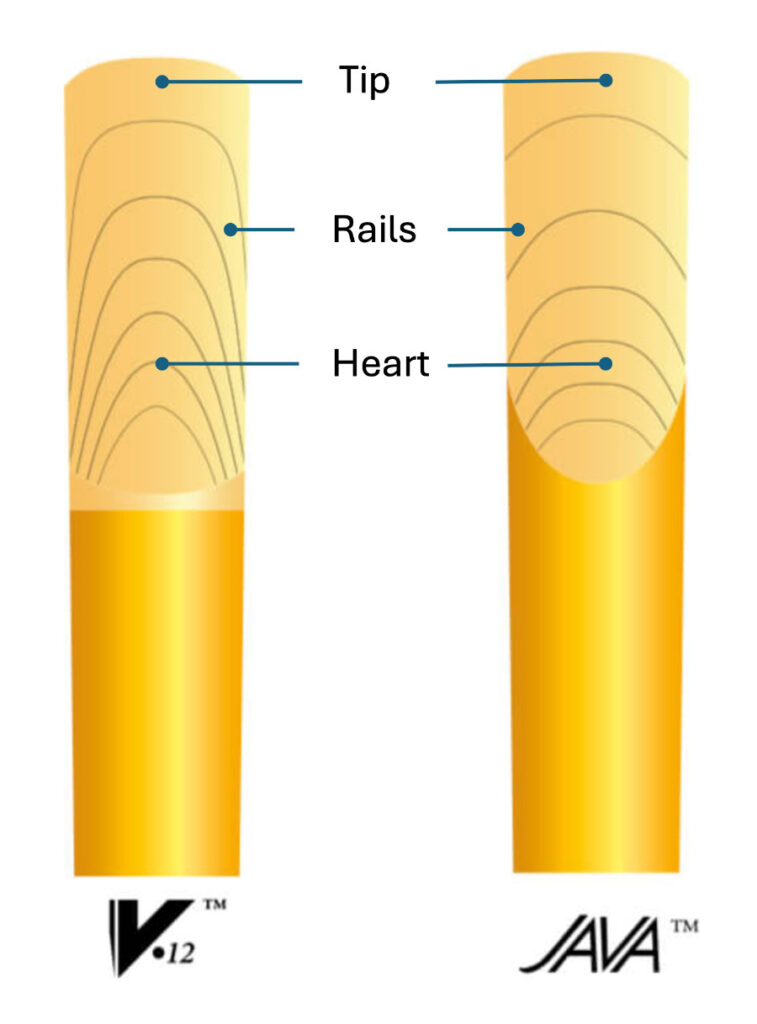
This diagram shows two different reeds from Vandoren. The V12 is typically considered classical, whilst the Java is typically considered jazz/pop. The black lines on the diagram show the contours of equal thickness, just like the contours you would see on an Ordnance Survey map.
This demonstrates that the V12 has a thicker heart with less thin tip and side rails. In other words, there won’t be as many high harmonics produced, and so the sound will be darker and rounder. The Java reed, in contrast, has less heart and a greater area of thin tip and side rails. This promotes the production of harmonics, so giving a much brighter sound.
Filed or Unfiled?
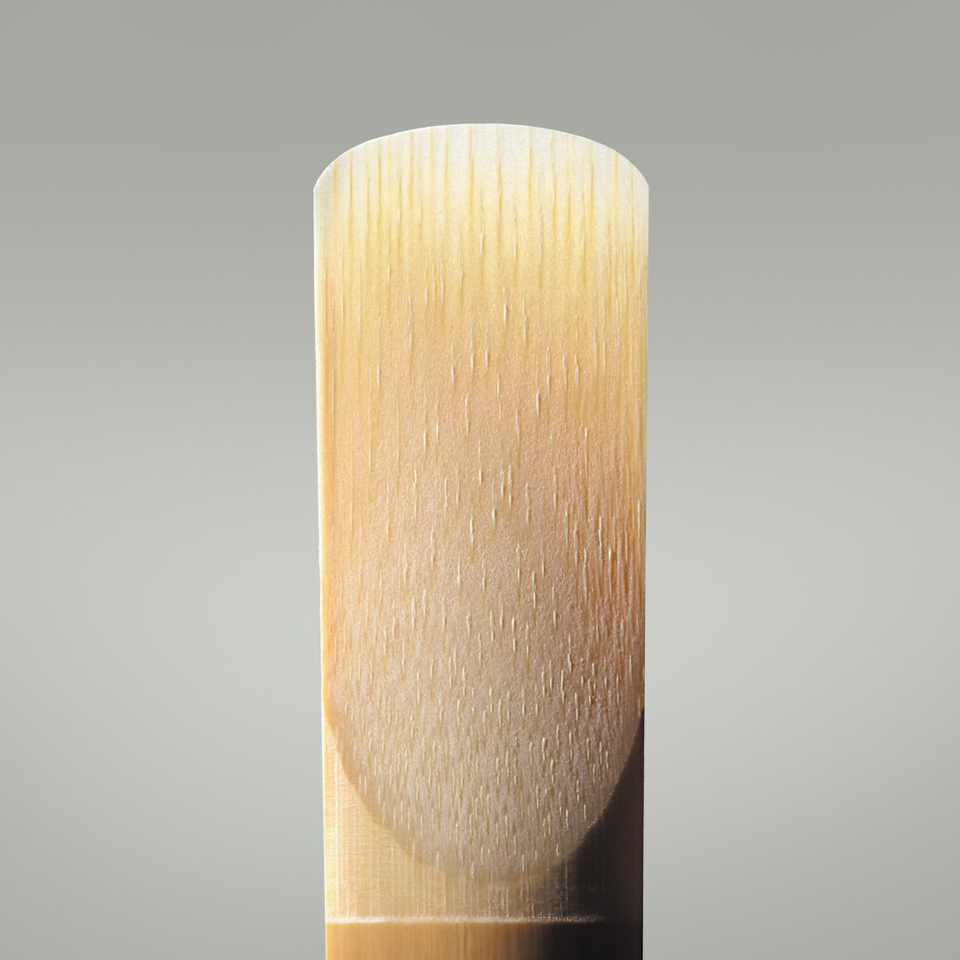
There is also a difference where the thin vibrating part (the vamp) meets the thicker stock. In the V12, a small amount of material has been cut back, i.e. ‘filed’. It is claimed that a filed reed will vibrate more freely to give a better response and a brighter sound. An unfiled reed is meant to be more resistant with a darker sound. Which one you choose to use is down to personal preference.
The different cuts of reed are designed to give a player a choice of tone depending on the balance of fundamental and harmonics that the reed creates. Of course, all this can then be affected by the mouthpiece and ligature, but that is for another blog!
If this blog post has reminded you to stock up on some new reeds, remember that Sax Bandits members can get an exclusive discount at Dawkes Music.






Leave a Comment