

In my previous post, All About That Bass (Sax), I wrote about some of the huge saxophones that prop up the bass end of the saxophone family. This time round let’s look at the small-but-mighty members of the family, which complete the upper ranges.

B♭ Soprano Saxophone
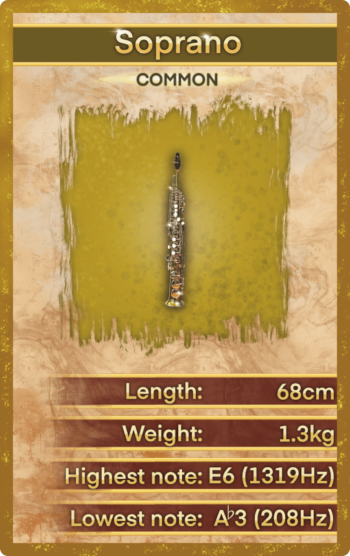
Our starting point is the familiar B♭ soprano, pitched just above the E♭ Alto and exactly an octave above the B♭ tenor. Often seen leading a sax quartet and occasionally in big bands and concert bands, the soprano also features prominently as a solo instrument in the hands of performers from Jan Garbarek to Branford Marsalis, and of course, not forgetting the legendary Kenny G.
Whilst traditionally straight, curved sopranos are also available and becoming increasingly popular. One of their design quirks is that they have to offset the bell or move the low B/Bb tone holes to the opposite side in order to leave enough space for the right hand.
E♭ Sopranino Saxophone
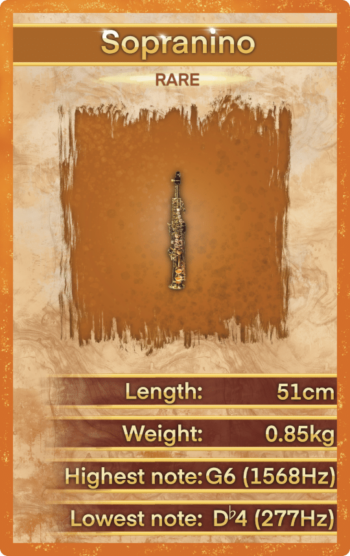
At an octave above the Eb alto, the Eb sopranino is higher and smaller than the soprano, at just over 50cm long and weighing in at just 850g. The relative rarity and the precision needed in manufacture mean it is typically more expensive than the soprano even though it is smaller.
Outside of Ravel’s Bolero (which included a part for the mythical sopranino in F), there isn’t a lot of music written for it, but if you can find the right occasion and master the very tight embouchure you can really soar over the rest of the band. Notable uses include leading the Nuclear Whales, performances by David Sanborn, and even on a couple of Jethro Tull tracks.
Whilst curved sopraninos do exist, they are notoriously hard to find and even harder to keep in tune (watch here).
B♭ Sopranissimo (Soprillo) Saxophone
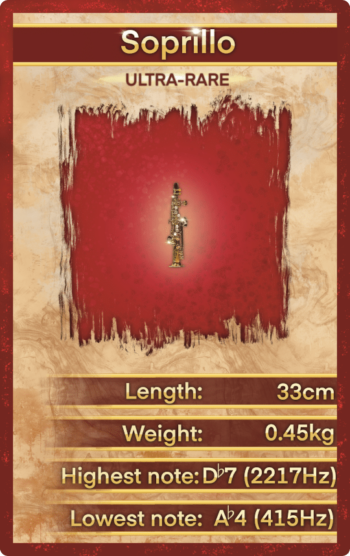
The Eb sopranino was the highest saxophone in Adolphe Sax’s original saxophone family, but that hasn’t stopped a team of master instrument makers in Munich from going one further!
The tiny Bb sopranissimo (soprillo) is the piccolo of the saxophone world, being almost the same size as a piccolo flute and even more dangerous in the wrong hands! It is a full octave higher than the Bb soprano and requires an embouchure so strong and tight that even experienced players struggle to play it for any length of time. At just 33cm long and 450g in weight (about the same as a couple of pieces of fruit) it is a tiny marvel of engineering precision.
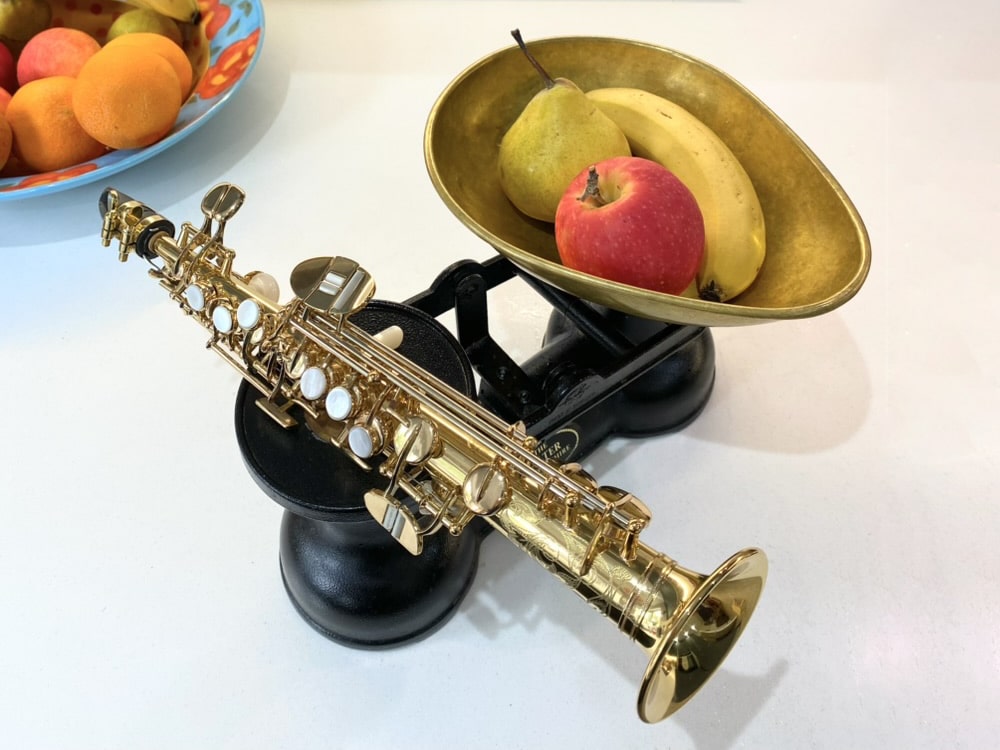
Whilst the soprillo is mainly used to add an extra level of brilliance and colour to the saxophone choir, it is not unknown as a solo instrument. In particular, check out Nigel Wood’s album Soprillogy.
Wait, there’s more…
We have reached the end of our look at the extremes of the saxophone family, but these are not the only unusual saxes out there. From the orchestral family in the keys of C and F, to the compact narrow-bore Tubaxes and Stainerphones, there are many more innovations and oddities left for us to explore.


Leave a Comment