

In my previous post, Meet The Saxophone Family, I gave a brief introduction to the whole family of E♭ and B♭ saxophones.

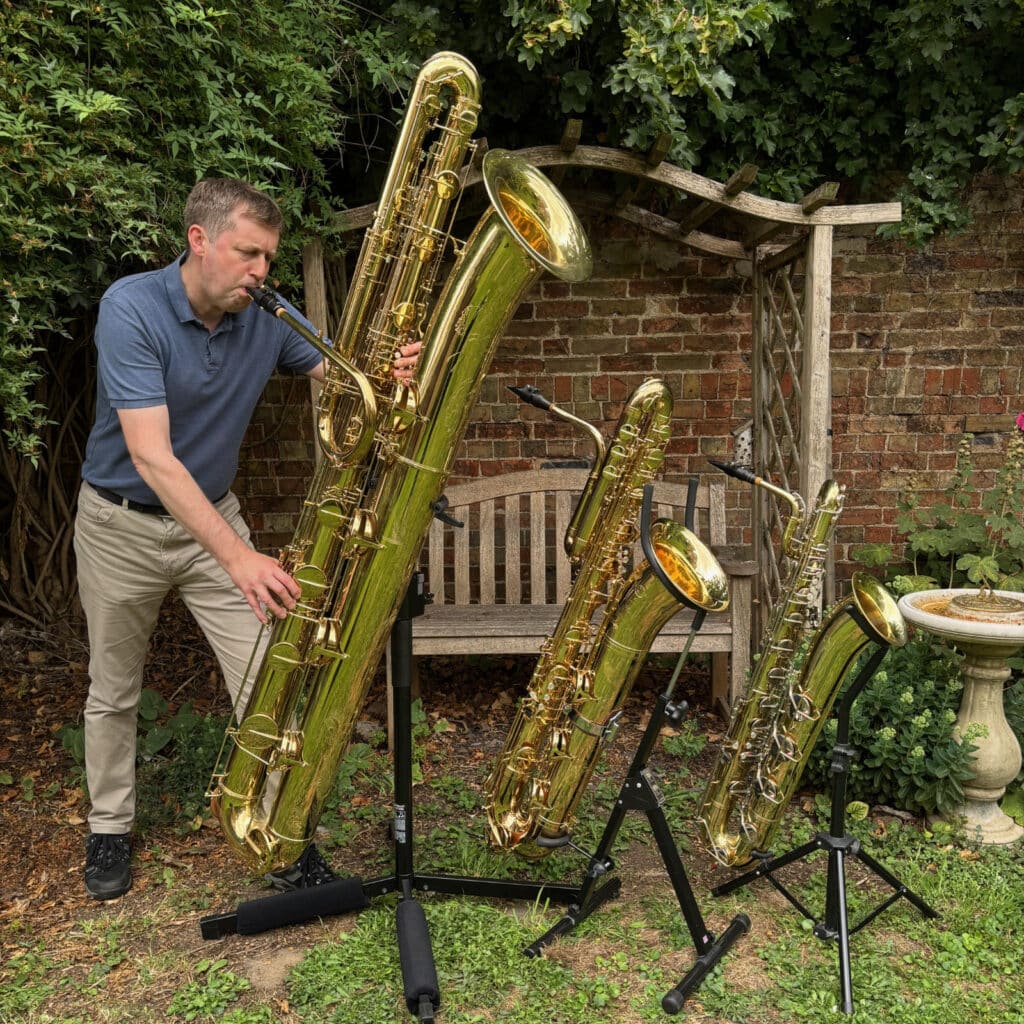
It’s time to look at the bigger members of the family in more detail and what makes them both special… and awkward. Here is my family portrait:
E♭ Baritone Saxophone
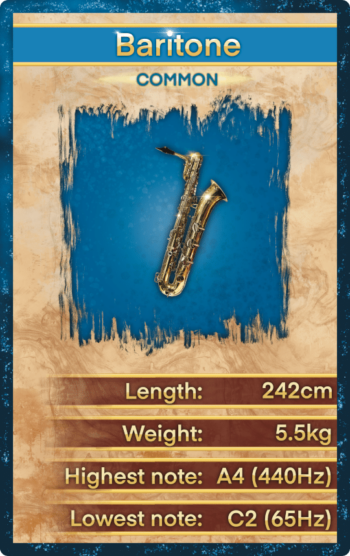
The E♭ baritone is already familiar to most, and whilst it’s a bit weighty it has a beautiful rich sound, capable of playing bass lines as well as taking the lead. Originally designed to play down to low B♭ like all its siblings, in the 1950s Selmer and other manufacturers started producing models extended down to a low A (which rather usefully is a concert C). By the 1980s almost all new baritone saxophones featured a low A key.
Legendary figures of the baritone saxophone world include Gerry Mulligan and the more excitable Leo P (see below).
B♭ Bass Saxophone
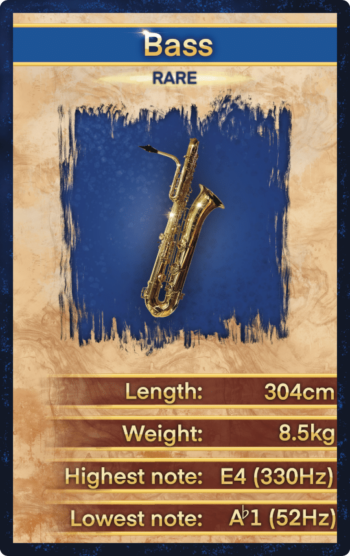
Sitting below the E♭ baritone and an octave below the B♭ tenor, the B♭ Bass gives you a fantastic deep warm sound, and you can really feel those low notes. Unlike the other low saxes, very few bass saxophones have a low A. Even then, with about 3 metres of tubing and weighing in at 8.5kg it can be a literal pain in your neck, although definitely worth the weight!
During the 1920’s the bass sax had a wave of popularity, appearing in small jazz bands and even the occasional big band, but then declined into obscurity. There has been a bit of a resurgence in recent years as affordable models from large music shops such as sax.co.uk and Gear4Music have become available.
Notable and talented contemporary bass saxophone players include Michael Wilbur (see below) and Colin Stetson.
E♭ Contrabass Saxophone
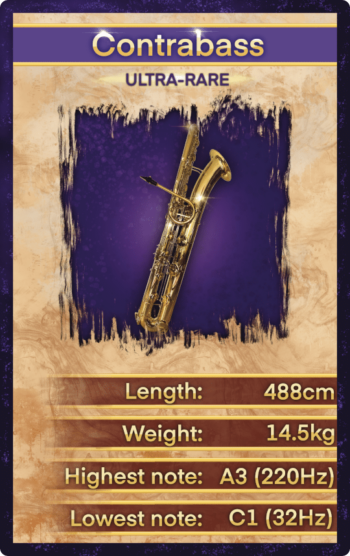
Big and bold as the B♭ bass saxophone is, there’s still more, and this is where things get a little out of hand! The mighty E♭ contrabass is an octave below the E♭ baritone. Yes, that means twice the length (nearly 5m of tubing, of which half a metre is just for the low A), twice the diameter and up to three times the weight (14.5kg – not something to hang off your neck). Contrabasses are incredibly rare with only a few made in the 20th century by Romeo Orsi and others. However, both J’Elle Stainer and Benedict Eppelsheim are now hand-making Contrabass saxophones on a regular basis.
Stored in a coffin-like case that’s too big to fit in most cars, and taking two people to lift, this is not a practical instrument. However, it is incredible to play! The low A on a contra is around 30Hz – not far above the limits of human hearing. It is an ‘experience’ as much as a note and you feel it as much as hear it.
Check out the Contrabass saxophone recordings from Nuclear Whales and Randy Emerick (see below) to see what the fuss is about.
B♭ Sub-Contrabass Saxophone
Eppelsheim
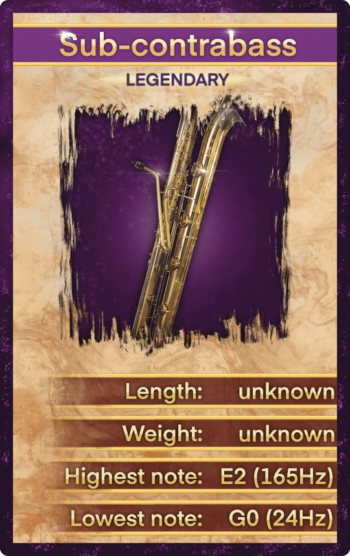
J’Elle Stainer
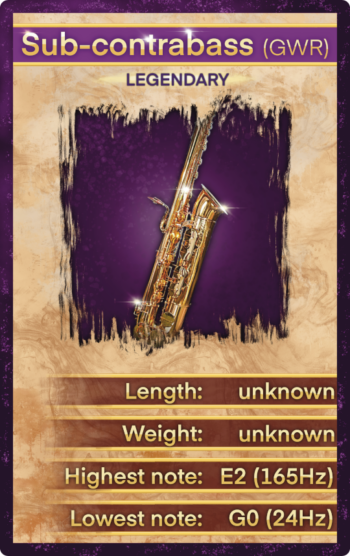
The saxophone family doesn’t end here though. In Adolphe Sax’s original patent it showed a B♭ sub-contrabass, known as the ‘Saxophone Bourdon‘, although there’s no evidence he ever made one. Rumours of playable sub-contrabasses, and even a dubious photo or two, occasionally surfaced during the 20th century, but the instrument remained largely a myth.
In the 2010’s, after a 166 year wait, the myth became reality as two manufacturers started hand making these monsters for discerning customers! Benedict Eppelsheim’s design is aimed at practicality (as much as the size allows), whereas J’Elle Stainer’s design is nearly 3 metres high and earned a Guinness World Record as the largest saxophone in the world!
You can find rare glimpses of these legendary monsters in videos by Doug Webb and Attilio Berni (see below).
That’s it for the big saxes. Next time we’ll look at the other extreme – the smallest members of the saxophone family!
Thanks to Thomas Tordoff, Benedikt Eppelsheim Wind Instruments, and Attilio Berni for their photos. Images of the J’Elle Stainer sub-contrabass made possible by Gilberto Lopes & Gilberto Joao Rocha.

Wow this is a real experience of the bassier saxes