

At some point in your playing, you are going to have to ‘sight read’ music – the stuff of nightmares or an exciting challenge? The good news is that, unless you are a seasoned pro, you will always have some time to look at the score and ‘get the picture’. But what should you look out for?
We asked players of all levels; “what are the most important things to look at when approaching a new piece of music?”. The answers were all different depending on experience and preferences so, remember, there is no right answer! What did emerge was a sort of checklist, depending upon the amount of time available before playing.

Title and musical style
Gives an idea of what to expect in the song, especially with stylistic rhythms, feel, and groove.
Key signature (and key changes)
The notes you are going to encounter. If you know your scales, you can lock into the tonality easier.
Tempo
The speed of the music, usually written at the top of the page as beats per minute (bpm). Have a clear pulse in mind before you start playing. Find out if those semi-quavers really are as fast as they look!
‘Road Map’
The navigation of a song; ie. repeats, key changes, tempo changes, etc. Or, you might think of it in terms of the song structure, ie. Intro, Verse, Chorus, Bridge, etc. Nothing should come as a surprise!
Time Signature & Rhythms
“If you play the wrong note at the right time, you are 50% right. If you play the wrong note at the wrong time, you are 100% wrong!” Establish the ‘musical grid’ and try to look at any difficult rhythms beforehand.
Actual Notes
To most, the least important thing! Try to look ahead for any added surprise ‘accidentals’ (sharps/flats/naturals).
The Sight-reading Check List
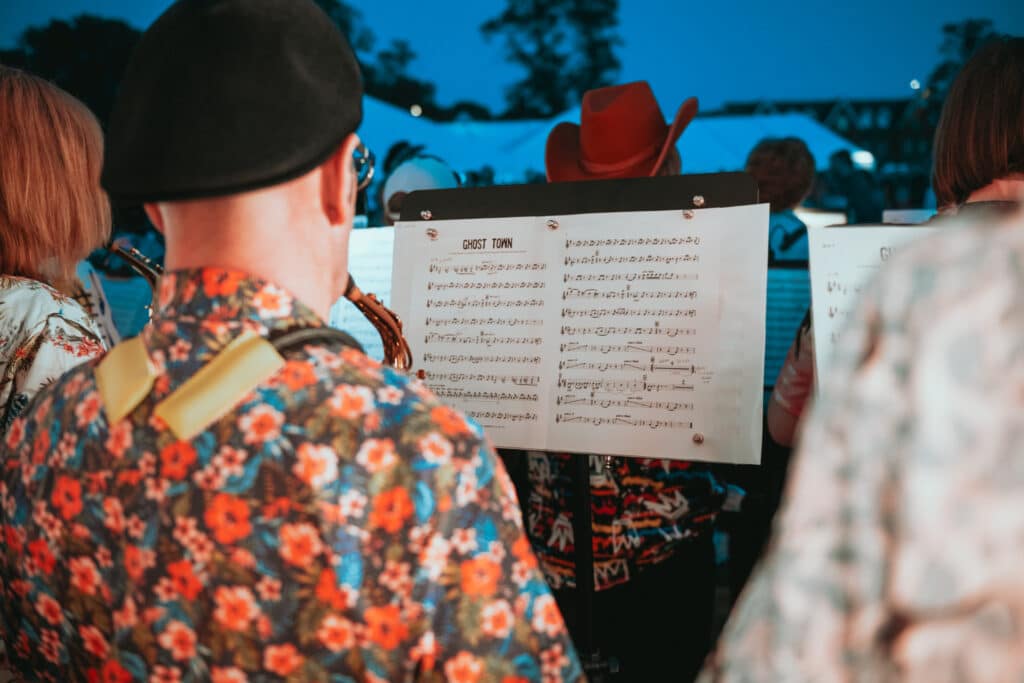
There two more key points. When you’ve got the hang of it and start playing, most pros will tell you:
- Don’t stop! – The rest of the band won’t wait, so let mistakes go.
- Look ahead! – Difficult, but try to see what is coming in the next bar.
In the end, sight reading is a musical skill like any other that must be learnt and practiced. Enjoy the challenge!



Thanks Lou & Matt advice and instruction like this is gold dust to us new starters, it’s very daunting when you first start to learn, I was just naive to think that it was just a case of looking at a note on the score and playing it at last months meeting I very quickly found out just how much I still have learn.